Algae, traffic film and gutter overflow turn white rooflines green and grey. Here's what causes it, how it's cleaned safely and how to keep uPVC looking good.
Fascia and soffit cleaning removes the algae, mould, dirt and streaking that turn white roofline boards green, grey or black over time. It is done with soft brushes, a gentle uPVC-safe cleaning solution and a clean water rinse, not harsh chemicals or a pressure washer. A properly cleaned roofline can look close to new again, and regular care helps it stay that way.
The roofline is one of the first things people notice about a house, and one of the last things homeowners think to clean. Here is why it discolours and what restoring it involves.
What are fascias and soffits?
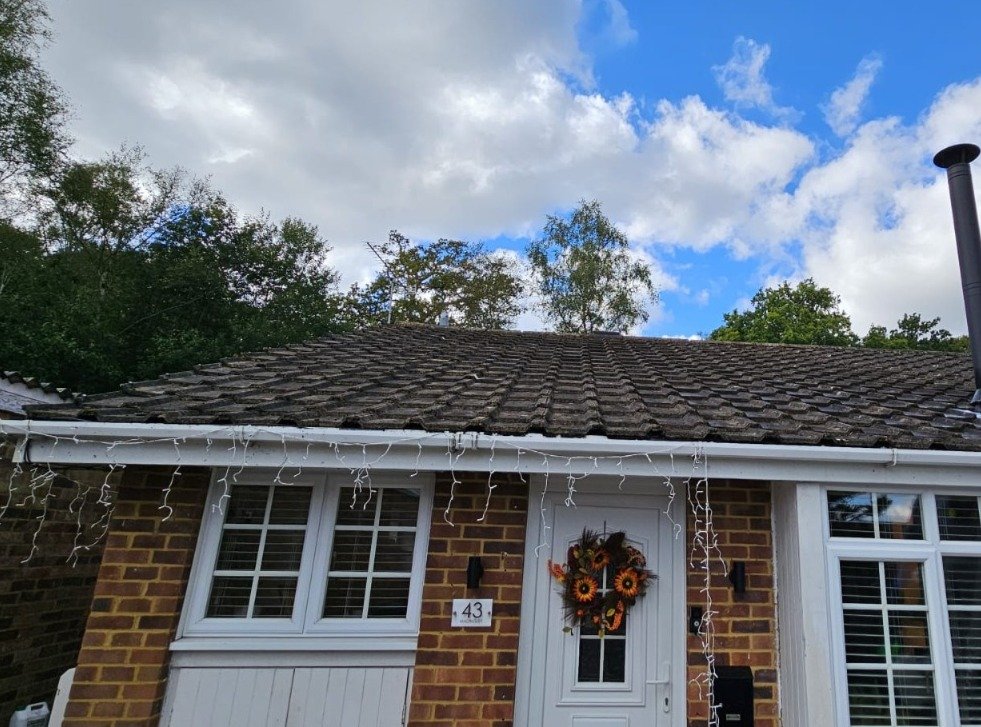
The fascia is the long board running along the bottom edge of the roof, usually where the gutters are fixed. The soffit is the horizontal board underneath, tucked between the fascia and the wall, closing off the underside of the roof overhang. Together with bargeboards on gable ends and the outside face of the gutters, they make up what is usually called the roofline.
On many homes built or updated in recent decades, these are white uPVC. Older houses may still have painted timber, and some have a mix of both.
Why do rooflines go green and grey?
Several things combine to discolour a roofline:
- Algae and mould. Green algae and black mould grow on surfaces that stay damp, particularly on north-facing walls and under trees. The textured surface of weathered uPVC gives them something to cling to.
- Airborne dirt. Traffic film, dust and pollution settle on horizontal surfaces and stick to them, slowly turning white plastic grey.
- Gutter overflow. When gutters overflow, dirty water runs over the front of the gutter and fascia, leaving dark vertical streaks.
- Tree sap and pollen. Homes near trees often pick up a sticky, yellow-green film in spring and summer.
- Cobwebs and insects. Soffits are sheltered and attract spiders, whose webs trap dust and look grubby from below.
- Weathering. Over many years, sunlight can dull the surface of uPVC, which makes it hold dirt more readily.
Shaded and damp spots discolour fastest. Gardens backing onto woodland or close to rivers, such as parts of Winnersh near the Loddon, often see green growth return more quickly than open, sunny plots.
How is fascia and soffit cleaning done?
A careful, gentle approach gives the best results without harming the plastic:
- Clear the gutters first. There is little point cleaning the fascia if a blocked gutter is going to overflow down it at the next rainstorm.
- Apply a suitable cleaner. A cleaning solution designed for uPVC loosens algae, mould and traffic film without attacking the surface.
- Agitate with soft brushes. Brushes on extendable water-fed poles work the cleaner into the surface from the ground, including the fronts of gutters and the undersides of soffits.
- Rinse with purified water. Purified water rinses away the dirt and dries without leaving spots or streaks, which matters in the Thames Valley, where the tap water is hard and can leave marks.
Working from the ground with poles avoids leaning ladders on gutters, which can crack plastic or knock runs out of line.
Gutter fronts, bargeboards and the walls below
The outside face of the gutter usually needs the most work. Overflowing water and airborne grime leave dark vertical streaks along it, and these can take more than one pass with the brush to lift. Bargeboards on gable ends and any boxed corners where fascia meets soffit are cleaned at the same time, so the whole roofline matches rather than leaving clean boards next to grubby ones.
If overflow has also stained the brickwork or render beneath, that is a separate job. Render, including K-Rend and similar finishes common on newer homes, should be cleaned with a low-pressure soft wash and a suitable treatment rather than blasted, which our jet washing and soft washing service covers.
What to avoid
- Abrasive pads, scouring creams or wire brushes, which scratch uPVC and make it hold dirt faster
- Strong solvents, thinners or neat bleach, which can damage or discolour the plastic
- Pressure washers close up, which can force water behind boards and into the roof space, and damage seals and older timber
Does uPVC need special care?
uPVC is low maintenance, but not no maintenance. Its surface is smooth when new and becomes slightly more porous with age, which is why older roofline boards stain more easily. Gentle, regular cleaning keeps the surface in better condition than an occasional heavy scrub. Many homeowners combine fascia and soffit cleaning with their gutter clean, so the whole roofline is done in one visit.
If your roofline is painted timber, cleaning is still worthwhile, but it is also a good chance to check for flaking paint, soft spots or rot, particularly at the ends of boards and behind leaking gutter joints. Timber that stays wet will deteriorate, and early repainting or repair is far easier than replacing rotten boards.
Plenty of homes on the established estates around Bracknell and Woodley had their original timber replaced with uPVC some years ago, and many of those boards are now at the stage where a thorough clean makes a visible difference.
Can you clean fascias and soffits yourself?
On a bungalow or low extension, you can clean fascias with a soft brush, warm water and a mild uPVC cleaner. Rinse well and avoid anything abrasive. Use a stable ladder on firm ground, have someone hold it, and do not lean it on the gutter. Never climb onto the roof, and take care with cleaning products near plants, pets and drains.
For two-storey homes, working at the roofline from a ladder while scrubbing overhead is awkward and risky. A water-fed pole system from the ground is much safer, and it is the same equipment we use for window cleaning.
Need a hand?
We offer fascia and soffit cleaning alongside our gutter cleaning service, so your gutters are cleared, downpipes checked and the roofline restored in a single visit, with before and after camera footage of the gutters. We work across the area, including gutter cleaning in Bracknell, gutter cleaning in Woodley and gutter cleaning in Winnersh. Request a free quote or call 01344 578902.
Frequently asked questions
Can you restore yellowed uPVC fascias?
Cleaning removes dirt, algae and traffic film, which is often what makes uPVC look yellow or grey. In many cases the boards come up much whiter. Where the plastic itself has discoloured through years of sun exposure, cleaning will improve it but may not return it to its original colour, as that change is in the material rather than on the surface.
How often should fascias and soffits be cleaned?
There is no strict rule. Many homeowners have them cleaned every year or two, often at the same time as their gutters, which keeps algae and dirt from building up into heavy staining. Homes in shaded, damp spots or close to trees may want them done more often, while open, sunny properties can usually go longer.
Is it safe to pressure wash fascias and soffits?
It is best avoided. High pressure close up can force water behind the boards and into the roof space, damage seals and wear older timber. It can also strip paint and dislodge gutter fittings. A soft brush, a uPVC-safe cleaning solution and a purified water rinse clean the roofline effectively without those risks.
Free, no-obligation quote
Want us to take care of it?
JRH Exterior Solutions is a family-run, fully insured team covering Berkshire, Surrey and Oxfordshire.